Retinning
Retinning can be the solution for making defective semiconductor chips functional again.
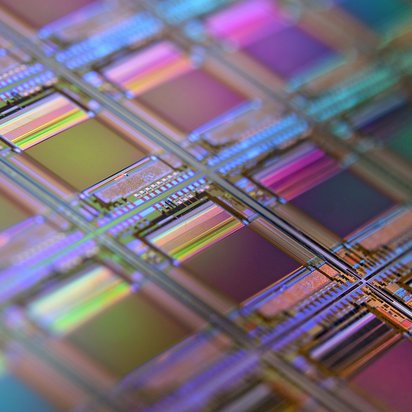
Retinning can be the solution for making defective semiconductor chips functional again.
Resources for semiconductor production are becoming increasingly scarce, but the demand for chips is constantly growing. “Retinning” can be the solution for making defective semiconductor chips functional again. ALTER | HTV offers the innovative NovaTIN® process for restoring and optimising semiconductor chips. With its pioneering retinning process, offers solutions for industry, aerospace and the defence sector, which are becoming increasingly important in times of supply bottlenecks and rising demands for sustainability and security.
Our world depends on electronic devices and systems, and semiconductor chips are indispensable. Without them, production lines come to a standstill and communication and data transfers fail. Specialises in restoring damaged chips and offers a cost-effective and sustainable solution with its retinning process.
Retinning involves experts renewing or replacing the tin layer on electronic components. This is necessary when connection legs are oxidised or corroded, often as a result of improper storage. Connecting pins are small metal pins on a semiconductor chip that provide the electrical connection to other components. “By renewing the surface coating, we can make the components processable again for the production process,” says Gunter Mößinger, Head of Research and Development at ALTER | HTV. “In times of supply bottlenecks and rising costs for new semiconductor chips, retinning offers a decisive alternative. By retinning old, defective components, we can keep production running and avoid high losses,” emphasises Mößinger
The importance of retinning is growing, particularly in the aviation and defence sectors, where components containing lead may continue to be used for safety reasons. The company offers a solution here by lead-free components in order to fulfil the high safety requirements. “There is no alternative to retinning in the aerospace and defence sector, as components containing lead are hardly available on the market. Lead is very stable and therefore offers the highest level of safety in the face of strong and constant vibrations, which are commonplace in aeroplanes,” says Mößinger.
In its process, relies on a combination of different reconditioning processes to restore even severely damaged components. The revivec® cleaning process, in which components are treated with ionised gas, and hot solder dipping, an automated process for re-tinning, are key components of this innovation. “Our processes are so precise that we can restore components that are considered irreparable by other suppliers,” explains Mößinger.